High-fibre fruits and vegetables: the complete guide.
Discover which fruits and vegetables are highest in fibre, how much counts towards your daily 30g and why fibre matters for breast cancer prevention.
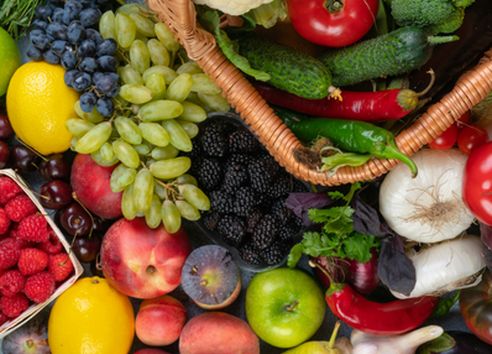
Ask most people to name the best high-fibre food, and they'll probably go for bran flakes or various seeds. But fruit and vegetables can contribute far more to the amount of fibre we eat in a day than many people realise.
The British Nutrition Foundation recommends that the average adult consumes at least 30g of fibre per day – but research suggests that most UK adults only eat around 20g a day.
Understanding which fruits and vegetables deliver the most fibre means you can make smarter choices, without completely changing your diet. After all, fruit and veg are accessible foods that most of us already eat each day. So, favouring the varieties that contribute the most to the amount of fibre you eat every day is a simple step towards building healthier habits that could benefit your overall health, including reducing your risk of breast cancer.
Does fibre reduce breast cancer risk?
Yes, fibre plays a meaningful role in reducing breast cancer risk. It does this through its effect on oestrogen levels, gut bacteria and weight regulation. We explain the full science on our fibre and breast cancer risk page. This blog focuses specifically on fibre gained from fruit and vegetables and how to make every portion count.
Soluble vs. insoluble fibre
There are many different types of fibre, but we can group them into two main categories: soluble and insoluble. Soluble fibre dissolves in water and forms a gel-like substance in our gut that helps nurture good bacteria and promotes healthy digestion. Insoluble fibre, on the other hand, does not dissolve in water and forms the bulk we need to help food pass through the gut. Both types are important for healthy digestion.
What are the highest fibre vegetables?
The table below ranks some commonly eaten vegetables by their fibre content (g/100 g edible portion.
Note: g of fibre given for raw version of vegetable unless otherwise stated.
Does the cooking method affect fibre content?
Cooking doesn’t typically reduce the fibre content of our food. However, heat can transform insoluble fibre into soluble fibre, so cooking can make it easier for your gut bacteria to use the fibre in your food. In general, cooking methods that use less water and/or shorter cooking times, such as steaming, roasting, microwaving, or quick sautéing, tend to preserve nutrients best. If you do boil your vegetables, using the cooking water in soups, sauces or gravy can help to retain some of the nutrients that come out.
What are the highest fibre fruits?
Fresh fruit is generally lower in fibre per 100g than vegetables. However, it's often easier to eat larger portions throughout the day. Whether as a ready-made snack, in a smoothie or as a healthy breakfast topping.
The table below ranks some commonly eaten fruits by their fibre content (g/100 g edible portion).
Berries: a category of their own.
Berries are some of the highest-fibre fresh fruits available. Plus, the fact that they freeze well makes them a practical choice all year round. Frozen berries are as good for you as fresh ones and are often cheaper too. Using frozen berries in a morning smoothie is an easy and cost-effective way to increase your fibre intake.
Speaking of fruity drinks, many people choose fruit juices as a way of getting their 5 a day. However, it’s worth noting that juicing usually removes the pulp where the fibre resides, leaving mostly sugar and water. If you're eating fruit for the fibre, the whole fruit, or a smoothie that blends rather than juices, is always better.
Need inspiration? Check out our healthy berry smoothie recipe here.
Does ‘5-a day’ cover your fibre needs?
The short answer is: not on its own.
The NHS recommends that adults in the UK aim for five portions of fruit or vegetables a day, where one portion equals about 80g. How this contributes to your recommended 30g of fibre depends on the varieties you choose. For example, five portions that include choices like raspberries and peas will deliver much more fibre than watermelon and peeled cucumber.
While fruit and vegetables can add to your recommended fibre intake each day, they’re not likely to be enough on their own. Explore some other amazing sources of fibre here.
How to eat more fibrous fruit and vegetables.
Understanding the numbers is useful. But how do we turn them into our healthy eating habits? Here are some of our top tips for introducing more fibre into your meals using popular fruits and vegetables:
At breakfast:
- Add berries to porridge or yoghurt. A portion of raspberries or blackberries can help towards your fibre goal before 9am!
- Blend rather than juice. If smoothies are a regular part of your morning, make sure you blend the whole fruit rather than juicing it to keep as much fibre as possible.
At lunch:
- Add avocado. Even half an avocado can boost the amount of fibre in a salad or sandwich – and adds healthy fats too. Check out our recipe for a delicious avocado salad with mango here.
- Add peas or edamame. Throwing a handful of frozen peas or edamame beans (defrosted) onto a salad adds texture and protein, as well as fibre.
At dinner:
- Pick vegetables with higher fibre density. For instance, swapping iceberg lettuce in salads for spinach can make a difference to your fibre intake.
- Pile on the peas! This applies to soups, stews, curries and pasta dishes alike. Peas are a freezer staple that are easy to add in bulk to help you towards your fibre goal.
Frequently asked questions about fibre.
Why is fibre important for our general health?
Along with helping to reduce breast cancer risk, fibre is good for your general health because it affects how fast you digest your food, the size and consistency of your stool, the frequency of your bowel emptying, how hungry or full you feel and how your body absorbs nutrients. It is also critical for supporting the good bacteria in your gut that support your everyday functioning.
Eating more fibre helps protect against conditions like heart disease, stroke, diabetes, obesity, high cholesterol, high blood pressure and colon cancer.
How does fibre impact our gut health?
Fibre acts as “prebiotics”, which are food ingredients that encourage the growth of favourable microorganisms in the gut. Eating a variety of fibre-rich foods helps create a diverse and stable gut microbiome, which is essential for good gut health.
How else can I easily add fibre to my meals?
There are plenty of ways to up the amount of fibre you eat each day. For example, beans and lentils are high-fibre, store cupboard staples that can be thrown into many meals. Cooked lentils have 15.5g fibre per 100g – over half of your recommended daily fibre! Seeds are also very high in fibre and can be added to your porridge at breakfast, alongside berries, with no extra effort.
Putting it all together.
Fruit and vegetables are one part of a high-fibre diet rather than the whole picture – wholegrains, seeds, nuts and other sources are equally as important. Explore more amazing sources of fibre here.
If you’re looking for more information on why fibre and diet matter for breast cancer risk, check out our dedicated website page here.
Wondering what other ways you can reduce your risk of breast cancer? Take our breast cancer prevention quiz.
